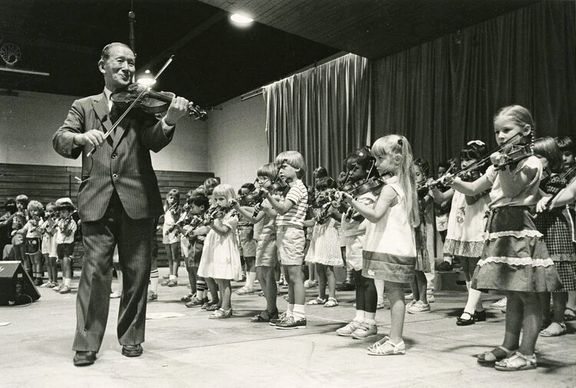
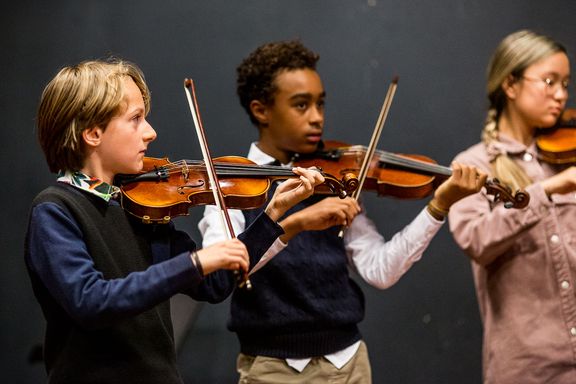
The Suzuki method, also called the Mother-Tongue approach, is designed for young learners. The main
tenet of the method is that “every child has talent.” Talent is developed by providing an
environment that helps the child reach their full potential.
How does it work?
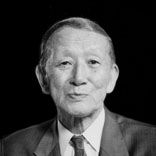
This method was developed in the mid 20th century by the violinist and pedagogue, Shinichi Suzuki
(1898-1998). Dr. Suzuki was amazed by how easily children learn to speak, and eventually read, their
mother tongue language fluently and with relative ease. He found a way to apply the principles of
language acquisition to learning the violin. This approach is now one of the most widely used forms
of music education in the world.
The emphasis is on continuous exposure to music, repetition of lesson material, combination of
individual and group lessons, playful elements in lessons and home practice, and active parental
involvement.
What are the basic principles?
Every child can learn in a positive and nurturing environment.
Parents play an active role in lessons and home practice.
Listening to music daily.
Learning to play the instrument first, then associating sounds with symbols.
Producing a beautiful tone in a balanced and natural way.
Learn, master, and celebrate small steps.
Social interaction through group lessons and concerts.
Testimonials
Teaching music is not my main purpose. I want to make good citizens. If children hear
fine music from the day of their birth and learn to play it, they develop
sensitivity, discipline and endurance. They acquire a beautiful heart.
Shinichi Suzuki
The most important thing I value in the Suzuki method is that by observing and
listening to music everyday any child can learn. There is a lot of emphasis on
parents' contribution towards their child’s training, making the entire family
more involved in the learning process. It helps the child learn in a comfortable
and happy environment with lots of confidence and strength.
Sirisha, mother of student, age 6
The Suzuki method is not just a teaching method for the student but an experience
for the whole family. The parents are as involved as the teacher and the
student, and there is a sense of responsibility and achievement for the entire
family. Right from the process of preparing for an upcoming concert to being
part of clapping lessons, it’s a transformational experience for the whole
family.
Chandra, father of student, age 6
Interested? Come and take a look!
See first-hand both our group and individual lessons. Gain insights into how I work and interact
with students and their parents as they develop in their musical journey. There is no charge to
observe.